Struggling with handoffs that stall and work that gets redone? Business process improvement fixes this by mapping one process, measuring it, changing the weak step and tracking the result. Start small and repeat.
For the wider field, see our overview of management consulting.
| Item | Value |
|---|---|
| Where improvement work sits | Subdiscipline within business process management (BPM) |
| Lean’s origin | Toyota Production System |
| Six Sigma defect goal | No more than 3.4 defects per million opportunities |
| Six Sigma first developed | 1986 |
| Agile sprint length | Typically 1-4 weeks |
These figures come from IBM’s process improvement overview and Asana’s methodology guide. Figures can change, so check the sources before you rely on them.
What business process improvement covers
IBM describes process improvement as a systematic way to raise the efficiency and effectiveness of how work gets done. It adds that the practice is a subdiscipline within business process management (BPM). The details are on IBM’s topic page.
Practitioners draw on established methods, including Lean, Six Sigma, Total Quality Management and the Theory of Constraints, according to IBM. You rarely need all of them. Most teams begin with a process map and one measure.
The payoff, as IBM frames it, comes from analyzing and refining processes so organizations can cut inefficiencies, lower costs and lift productivity. That makes the work useful for any team with repeated handoffs, from onboarding to invoicing.
If you are weighing outside help, read the guide that answers what does a management consultant do before you decide.
Common methods and what each one does
Each method below attacks a different kind of problem. Knowing the difference saves you from using a heavy tool on a light job.
- Lean removes activities that add no value. It grew out of the Toyota Production System and uses tools such as 5S, value stream mapping and Kanban, per IBM.
- Six Sigma targets defects and variation with statistics. Its goal is no more than 3.4 defects per million opportunities, and its DMAIC cycle runs define, measure, analyze, improve, control, as IBM explains.
- Kaizen is continuous improvement: small, incremental enhancements made on an ongoing basis, as described by G2.
- Agile splits improvement work into short iterations or sprints, typically lasting 1-4 weeks, according to IBM.
- Total Quality Management is a management approach centered on continuous improvement and customer satisfaction, says IBM.
- Business Process Reengineering is the radical option. It rethinks and redesigns core processes instead of tuning them, per IBM.
Six Sigma has a traceable origin. Asana’s guide says it was developed in 1986 by Motorola engineer Bill Smith.
Lean sources name specific kinds of waste to hunt for. Miro’s guide lists these, and they work as a checklist when you review a process map:
- Overproduction: creating more than needed or before it is needed.
- Waiting: idle time between process steps.
- Transportation: unnecessary movement of materials or information.
- Over-processing: doing more work than the customer requires.
- Inventory: excess stock or work-in-progress piling up.
- Motion: inefficient movement of people or equipment.
- Defects: rework caused by errors or quality issues.
A starter plan for your first process
IBM outlines a general sequence that differs by methodology but works as a template. Run it on one process before you try to scale it.
- Pick the process. Choose one that clearly affects performance and customer satisfaction, and write down where it starts and stops.
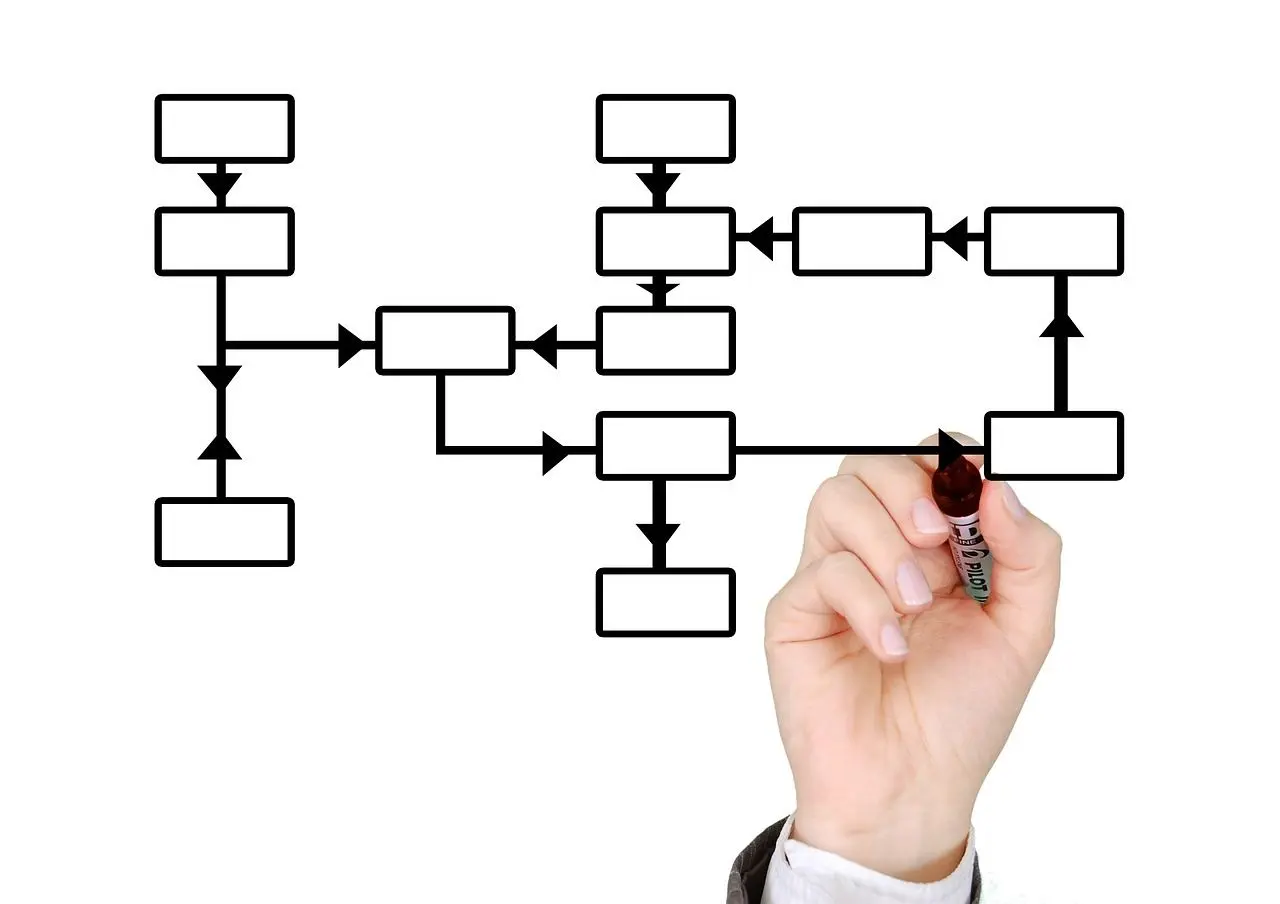
- Map it. Draw every step, input, output and stakeholder, and add data such as cycle time, error rates and customer feedback.
- Analyze it. Mark bottlenecks, waste and rework, then use root cause analysis to find where problems begin.
- Brainstorm fixes. Ask the people involved for options and weigh the feasibility and impact of each.
- Plan and implement. Assign steps, timelines, owners and resources, then make the change.
- Monitor. Track key performance indicators and gather feedback to see whether the change helped.
- Standardize. Document the improved process, set new standard operating procedures and train people on them.
Mapping takes less time than many teams fear. Creately notes that value stream mapping can take up to 3 days, and it can go faster with the right team. G2 advises involving the people who work with the process daily and using the map to guide improvement conversations.

Decide early how you will judge success. Our comparison of okr vs kpi helps you separate the goal you set from the measure you track.
Which method should you pick?
The right choice depends on why you want to improve and what you want to improve, as Asana puts it. Use the problem to pick the tool:
- Defects and inconsistent output: Six Sigma and its DMAIC cycle.
- Delays and wasted effort between teams: Lean.
- Steady, low-risk gains: Kaizen.
- Changing requirements and the need for fast feedback: Agile.
- A process that is broken at its core: reengineering, which brings the most disruption.
You also do not have to pick just one, because you can combine methods.G2 observes that many leading businesses blend frameworks, such as using Lean principles within a BPM platform or applying Kaizen to supplement Six Sigma initiatives.
Mistakes that stall improvement work
Miro flags three common mistakes:
- Skipping root cause analysis, so you fix symptoms.
- Ignoring the people side of change.
- Measuring the wrong metrics.
Gains also fade when nobody owns them. IBM says training and onboarding employees on new procedures helps everyone understand and sustain the changes.
Several sources used here are published by software vendors. Treat product pitches as marketing: this site has no affiliation with any of them and carries no affiliate links.
Frequently asked questions
How is business process improvement different from BPM?
Show answer
BPM is the continuing oversight of every process in an organization. Improvement work is the targeted effort inside it that fixes a specific process, which is why teams often run it as a project with a start and an end.
Do you need Six Sigma to get started?
Show answer
No. A simple map, one measure and a single change are enough for a first pass, and you can add DMAIC or other formal tools later. Asana treats the method as a choice that follows your goal, so match the tool to the problem.
Which process should you fix first?
Show answer
Look for the process people complain about most and customers feel most. A narrow scope beats an ambitious one, because a process you can describe on a single page is easier to map and measure.
How often should you review an improved process?
Show answer
IBM says to review periodically so the gains hold and keep meeting goals, but it gives no fixed interval. Set a rhythm that fits how often the process changes, and revisit it after any major system or staffing change.